



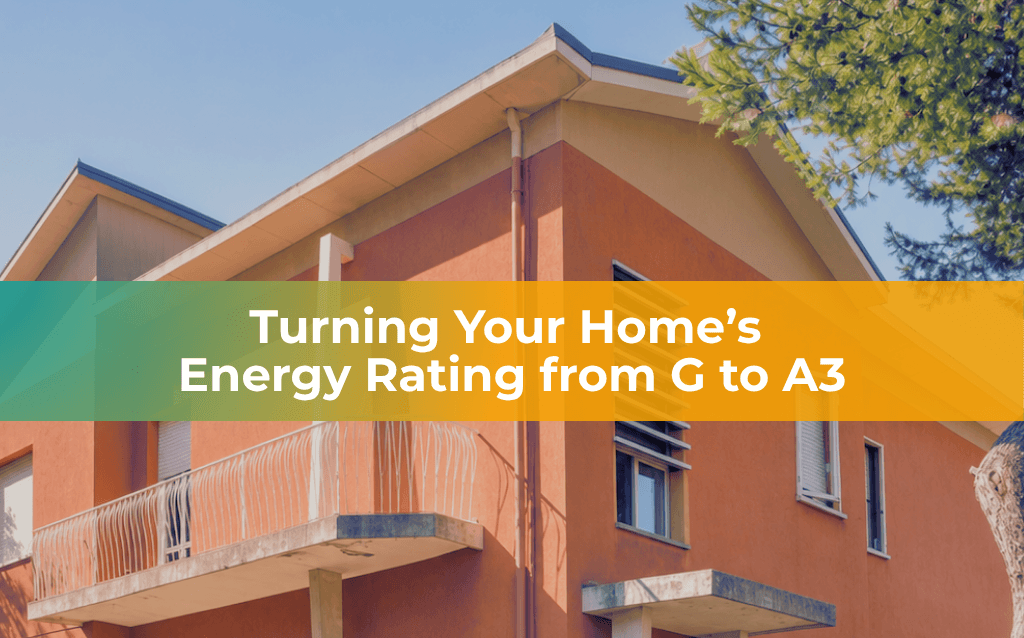
A 1960s home in Fano, located in climate zone E and exposed to cold winters, was upgraded from energy class G to A3.
The result came from an integrated design approach, where the building envelope, heat pump, radiant heating system, photovoltaic panels and smart controls all work together to reduce energy demand, from 288 to 37 kWh/m² per year.
This case study shows that energy efficiency is not achieved through a single system, but through a coherent project tailored to the building, its consumption patterns and its real energy needs. In this kind of retrofit, thermal insulation plays a decisive role, while the heating and control systems help optimise the available energy, especially when photovoltaic panels are installed.
Project Overview
Energy retrofitting an existing home is not simply about replacing an old system with a newer one, or installing efficient technologies without considering the building envelope.To achieve a real improvement in performance, the project must connect the building, its level of thermal insulation, its energy needs, the technologies installed and the way the system is controlled.
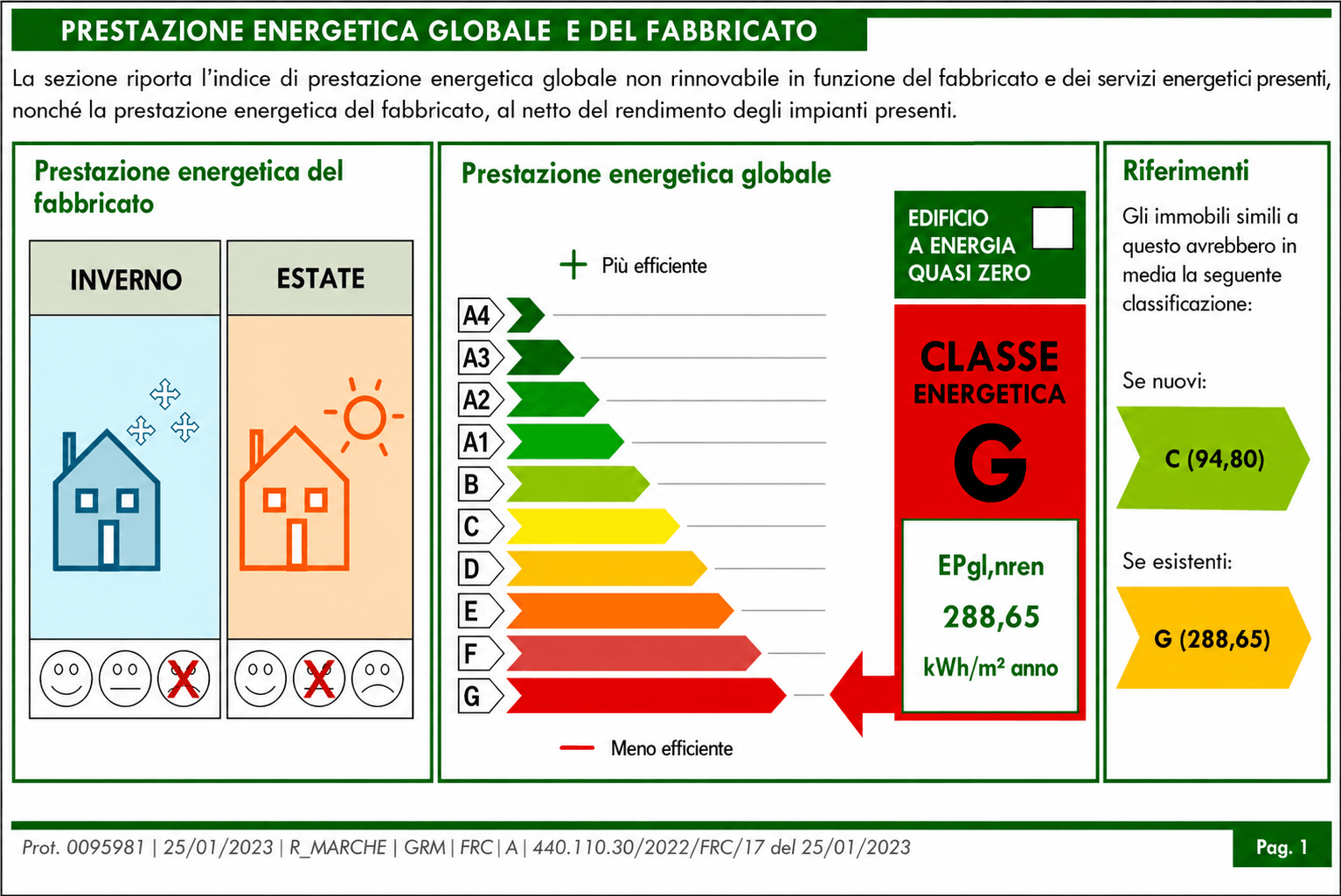
This case concerns a 1960s home in Fano that started from a highly inefficient condition: energy class G and a demand of 288 kWh/m² per year. After the intervention, the building reached energy class A3, reducing its demand to 37 kWh/m² per year.
The result comes from an integrated system where insulation, heat pump, radiant heating, photovoltaic panels and smart energy management are not separate elements, but parts of a single energy strategy. In this balance, the building envelope plays a decisive role in reducing heat losses, while the system and its controls optimise the energy managed by the building
How much energy does a Class G home use? Insights from a real case study
The energy consumption of a Class G home depends on several factors: its location, the local climate, the level of insulation and the heating demand of the building.
In this case, we are looking at an energy-intensive home in Fano, located in climate zone E. This means the building is in an area with relatively cold winters and a significant need for heating.
Before the retrofit, the home had an energy demand of 288 kWh/m² per year. Built in the 1960s, it started from a highly inefficient condition: major heat losses, a poorly performing building envelope, an outdated heating system and no real integration with renewable energy sources.
The pre-intervention Energy Performance Certificate confirmed an energy class G, with an EPgl,nren index of 288.65 kWh/m² per year. It also showed a winter heating system based on a standard boiler from 1995, powered by diesel/fuel oil, with a nominal output of 51 kW.
These figures show that the issue was not just the age of the heat generator, but the overall balance between the building, insulation, heating system and energy consumption. In an older home with major heat losses and no integration with renewables, replacing a single component would not have been enough to achieve a significant improvement in performance.
How important is thermal insulation in improving a home’s energy performance?
Thermal insulation is one of the most important factors in an energy retrofit project. Before choosing a new heating system, heat losses must first be reduced through a better-performing building envelope: external insulation, high-efficiency windows, insulated opaque surfaces and the correction of the building’s critical weak points.
In general terms, around 60% of a home’s energy performance improvement depends on the quality of its insulation, while the remaining 40% comes from the efficiency of the heating system, the overall design strategy and the way the system is controlled. This is why, in an older building, simply replacing the heat generator is not enough. A heating system can only perform efficiently if it operates within a building that is able to retain heat more effectively in winter and limit unwanted heat gains in summer.
What building and system upgrades were carried out to reduce energy consumption?
The project involved a complete energy retrofit of the home, combining improvements to the building envelope with the installation of a new integrated energy system designed to manage heating, cooling and domestic hot water in a coordinated way.
This was not simply a boiler replacement, but a full redesign of the building-system relationship. On one side, reducing heat losses lowered the building’s overall energy demand; on the other, switching to a fully electric system supported by on-site renewable energy made consumption management far more efficient.
The new setup integrates a heat pump, radiant heating system, domestic hot water production, photovoltaic panels and smart controls, allowing all components to work together as part of a single coordinated energy system rather than as separate technologies.
How was the mechanical system and control strategy designed?
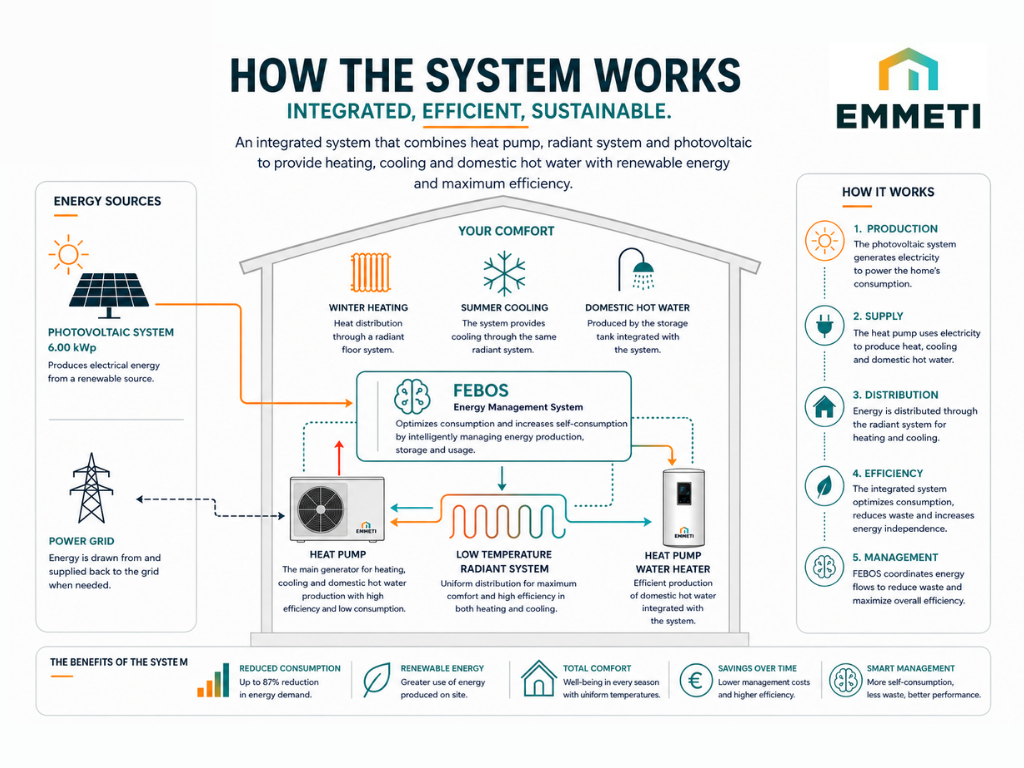
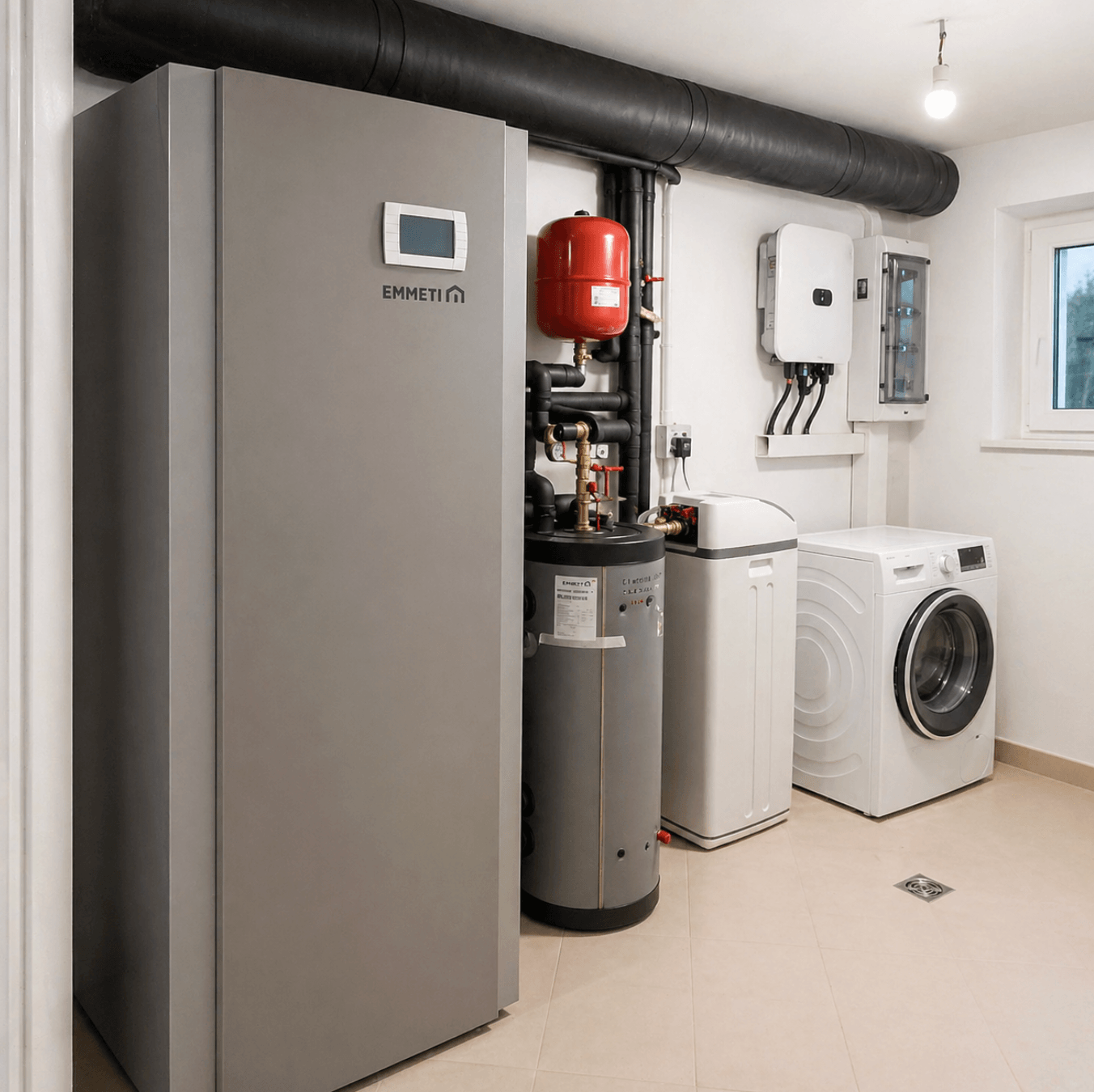
The system design was developed by integrating several subsystems, as shown in the heating, cooling and photovoltaic layouts. The goal was not simply to install efficient technologies, but to make them work together according to the building’s real energy needs and the energy available on site.
In winter operation, the air-to-water heat pump acts as the main generator and feeds the radiant system, which is designed to work at low temperatures and distribute heat evenly throughout the home. This improves overall system efficiency and reduces consumption compared with traditional solutions.
For summer cooling, the same system operates in cooling mode, using the radiant system and the designed distribution network to maintain consistency across the different seasons.
Domestic hot water is produced by a heat pump water heater, integrated into the overall system and sized according to the building’s needs.
A photovoltaic system of around 6 kW was installed to support energy production, directly powering the system’s electrical consumption, reducing grid demand and increasing the share of renewable energy.
The system is completed by FEBOS controls, which optimise the operation of the different components. When photovoltaic energy is available, FEBOS helps make better use of the electricity produced on site, supporting self-consumption and coordinating the heat pump according to the energy generated by the panels.
In this way, the system does not operate statically. It adapts to real operating conditions: the building’s demand, photovoltaic production, household electricity use and comfort requirements. The system diagrams therefore show how these elements are not independent, but part of a single design strategy created to optimise energy management in every operating condition.
What is FEBOS, and how does it improve energy management?
FEBOS is EMMETI’s control system, designed to improve plant operation and manage a home’s energy consumption more effectively. Its role is not to replace the main components of the system, but to coordinate them. The heat pump, radiant system, domestic hot water production and photovoltaic system can therefore work in a smarter, more consistent way, based on the building’s real energy needs.
When photovoltaic panels are installed, FEBOS helps make better use of the energy produced on site. It monitors production and consumption, encourages self-consumption of the available electricity and guides the heat pump’s operation when photovoltaic production is most favourable.
This approach reduces grid demand, limits waste and improves the overall efficiency of the system.
What results were achieved after the retrofit?
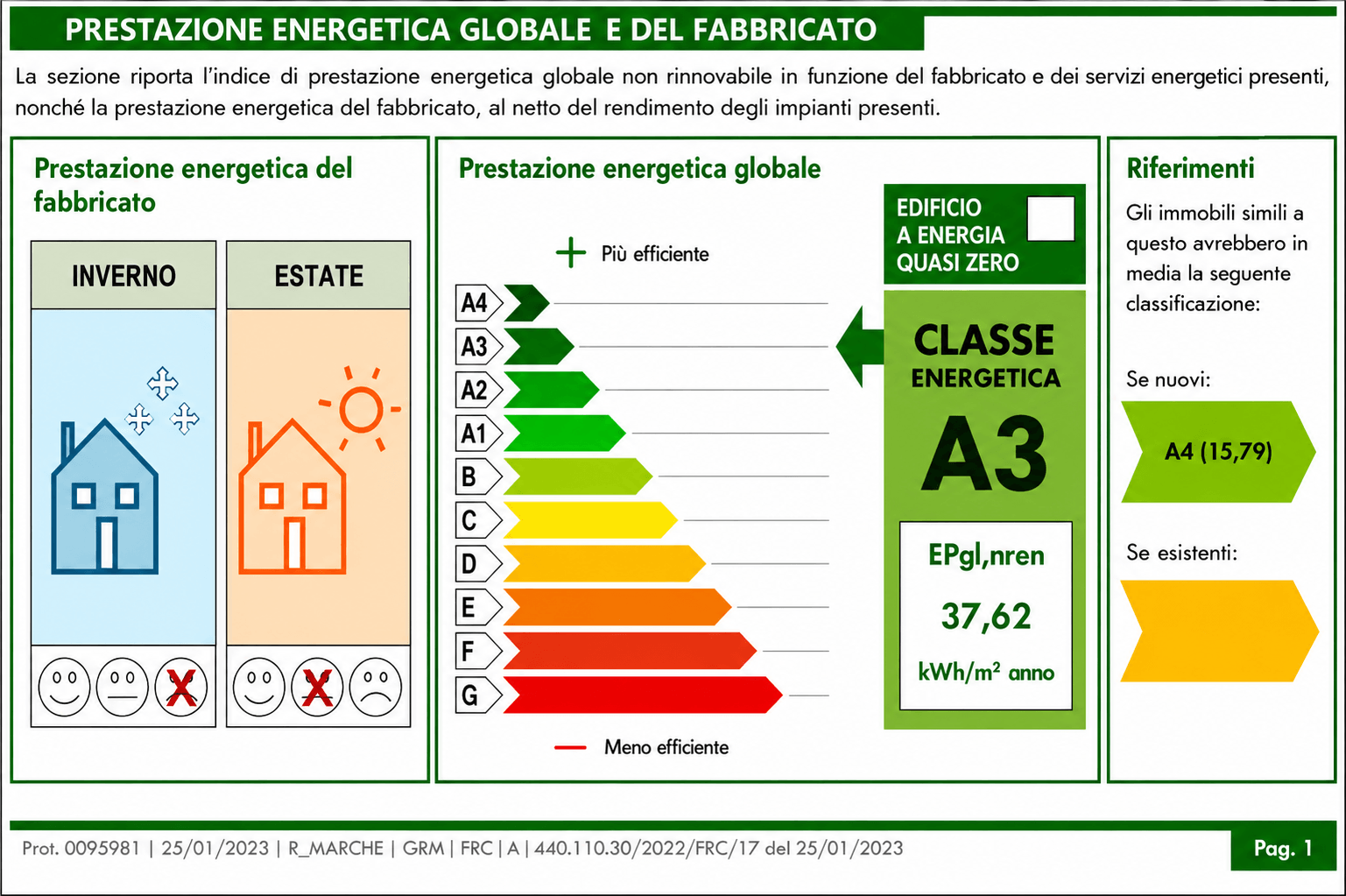
The retrofit led to a dramatic improvement in the building’s energy performance, upgrading the home from energy class G to A3, as confirmed by the post-retrofit Energy Performance Certificate, and reducing energy demand from 288 to 37 kWh/m² per year.
This was not just an incremental improvement, but a complete transformation in the building’s energy behaviour, achieved through a fully integrated design approach.
How much were the energy costs reduced
The building’s energy demand was reduced by approximately 87%, moving from a highly inefficient condition to a high-performance energy configuration.
More specifically:
• Before the retrofit: 288.65 kWh/m² per year
• After the retrofit: 37.62 kWh/m² per year
This reduction is significant because it has a direct impact on both running costs and the building’s overall energy demand.
The estimated annual energy costs also highlight the benefits of the intervention. Before the retrofit, the home consumed around 744 kWh of electricity, equivalent to approximately €134 per year based on an energy price of €0.18/kWh. In addition, it required around 3,248 litres of fuel oil, with an estimated annual cost of about €5,846. Total annual energy costs before the intervention were therefore around €5,980.
After the retrofit, the heat pump system requires approximately 2,428 kWh of electricity drawn from the grid, equal to around €437 per year. This is complemented by approximately 2,197 kWh covered directly by the photovoltaic system and self-consumed within the home. As a result, estimated annual energy costs dropped from around €5,980 to approximately €437, delivering indicative savings of about €5,543 per year.
The photovoltaic system therefore plays a key role, but so does the way the energy is managed. FEBOS helps optimise the use of free solar energy by increasing self-consumption and favouring system operation when photovoltaic energy is available.
In addition, replacing a fossil-fuel-based system with a fully electric solution supported by photovoltaics significantly reduces the building’s environmental impact.
How does the integrated energy system work?
The system works by integrating energy production, distribution, control and use. The heat pump, radiant system, photovoltaic panels and FEBOS controls operate in a coordinated way, based on the building’s real energy needs and the energy available at any given time.
Unlike a traditional system, where each component often works independently, here the technologies are designed to operate as one single system. The control strategy optimises the operation of the different elements throughout the year, improving indoor comfort and reducing energy waste.
How are heating, cooling and domestic hot water managed?
The air-to-water heat pump is the core of the system and covers the building’s main energy needs: winter heating, summer cooling and domestic hot water production.
During winter, the heat pump supplies the radiant heating system, which is designed to operate at low temperatures. This is a key factor, as it increases the efficiency of the heat pump and reduces energy consumption compared with traditional high-temperature systems.
The control strategy also helps make better use of the radiant system’s thermal inertia, storing thermal energy when conditions are most favourable and maintaining comfort in the following hours.
During summer, the same system operates in cooling mode, using the existing distribution network and ensuring continuity between the different operating modes. Domestic hot water is produced by a dedicated heat pump water heater, fully integrated into the overall system and managed according to the home’s actual demand.
What role does photovoltaics play in the system’s operation?
The 6 kWp photovoltaic system directly supplies electricity to the heat pump and the building’s other electrical loads.
This means that a significant share of the energy used is generated on site, reducing reliance on the grid and increasing the use of renewable energy sources. The main advantage is not only economic, but also operational: the system is designed to make the best use of energy when it is available.
Within this approach, FEBOS helps maximise the value of the energy produced by the photovoltaic system by increasing self-consumption. The control system can manage the operation of the heat pump and domestic hot water production according to solar energy availability, reducing waste and improving the overall efficiency of the system.
Why is an integrated system more efficient than separate systems?
An integrated system is more efficient because each component is sized and designed to work with the others. The heat pump can operate at low temperatures thanks to the radiant system, while the photovoltaic panels help cover the system’s electrical consumption.
In traditional systems, individual components often operate without proper coordination, resulting in lower efficiency and higher energy use.
In this case, the system diagrams clearly show that the project is not based on simply adding different technologies, but on a system-based approach where energy production, distribution and use are fully integrated.
Conclusion
This case shows that energy retrofitting a building is not about choosing a single technology, but about designing a system that is consistent with the property, its level of insulation and its real energy needs.
The upgrade from class G to A3, with energy demand reduced from 288 to 37 kWh/m² per year, was not the result of one isolated intervention. It came from a project in which the building envelope, heat pump, radiant system, photovoltaics and smart controls work together as an integrated system.
Thermal insulation reduces heat losses and lowers the building’s energy demand. The mechanical system then manages the energy required for heating, cooling and domestic hot water efficiently. Within this approach, FEBOS helps optimise system operation and make better use of the energy produced by the photovoltaic system, increasing self-consumption and reducing waste.
This system-based approach is what makes it possible to achieve concrete, measurable results: better energy performance, lower consumption and a greater share of renewable energy.
In this sense, efficiency is not an add-on. It is the direct result of proper design, where the building, the system, the controls and the real use of energy are all connected.