



Designing a low-consumption home means integrating the system from the very first stages of the project, not adding it as a technical accessory at the end of the works.
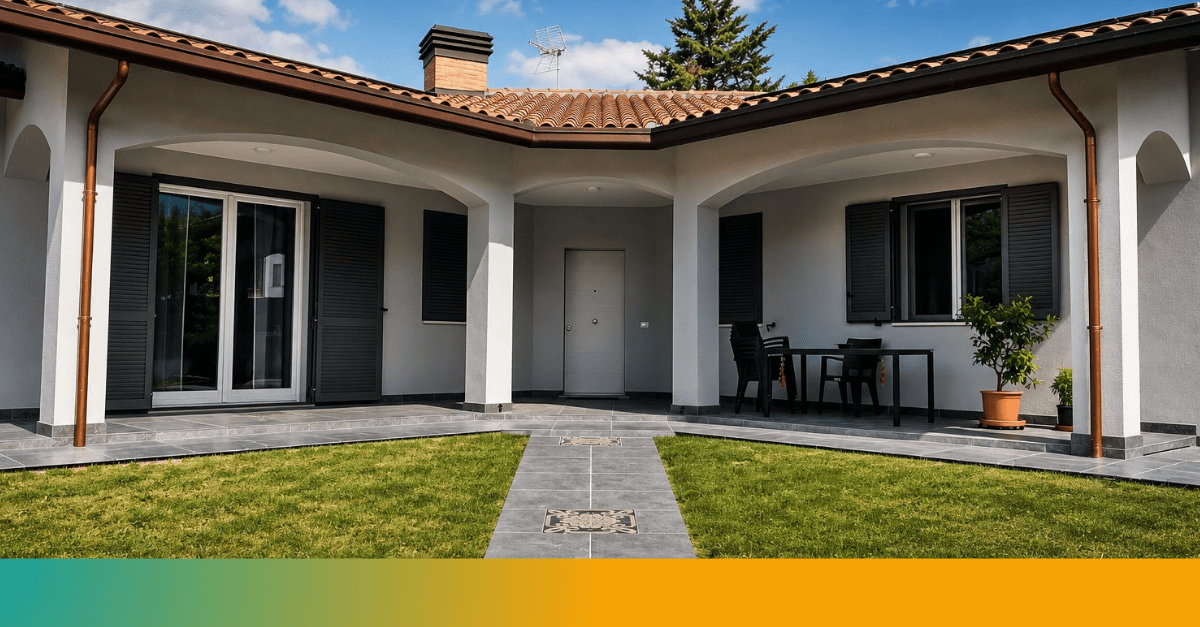
In the realization in Gualdo Tadino by EMMETI, the plant system was developed as a true project within the project, in relation to the building, the energy needs and living comfort.
The new single-family home integrates an air-water heat pump, underfloor radiant system, photovoltaic system, solar thermal system, predisposition for mechanical ventilation and FEBOS regulation.
Renewable sources play a central role: the solar thermal system covers 66.4% of the annual domestic hot water requirement, while the installed photovoltaic system is 4.0 kW.
As stated in the technical report, we achieved a renewable coverage of 85.9% for domestic hot water and 70.2% considering winter air conditioning, DHW and summer air conditioning.
The result is a low-consumption home, certified in energy class A3, with an EPgl,nren value of 22.880 kWh/m² per year
Introduction
When talking about low-consumption homes, attention often focuses on individual technologies: heat pump, photovoltaic system, radiant system or mechanical ventilation. In reality, the difference does not come from the single component, but from the way the entire system is designed and made to work together.
In a new home, the system should not be developed only in the final phase of the construction site. It must enter the design process from the beginning, because it directly affects the comfort of the rooms, energy management and the future behaviour of the home.
This is the approach adopted by EMMETI in the Gualdo Tadino realization, where the plant project was developed as an integral part of the home. Air-water heat pump, underfloor radiant system, photovoltaic system, solar thermal system, predisposition for mechanical ventilation and FEBOS regulation were integrated into a single system designed to improve efficiency, comfort and the use of energy produced from renewable sources.
In this real case, the system therefore becomes a true project within the project: a central component of the energy performance and liveability of the building.
How is a low-consumption home designed?
A low-consumption home is designed starting from the real needs of the building and integrating the system from the very first stages of the project. Efficiency does not come from the sum of efficient technologies, but from the ability to make them work together in a coherent way.
In a new construction, every plant engineering choice affects the future behaviour of the home.
The heat pump must be sized according to the needs of the building. The radiant system must be designed together with the distribution of the rooms. The photovoltaic and solar thermal systems must be integrated into the overall energy logic. Regulation must coordinate the operation of the system, preventing each component from working in isolation.
In the system designed in Gualdo Tadino, this logic was applied to a new single-family home. The system was not treated as a technical element to be inserted afterwards, but as an integral part of the house: generation, distribution, domestic hot water, ventilation, renewable sources and regulation were designed as a single system.
The result is a home designed to consume less, make better use of the energy produced on site and guarantee stable thermal comfort. It is not only a question of energy class: it is the way in which the building and the system work together that determines the final quality of the home.
System designed for a low-consumption home
The plant system realized by EMMETI was designed as an integral part of the home, not as a sum of components installed separately. The objective was to create a system capable of managing heating, domestic hot water, production from renewable sources and regulation in a coordinated way.
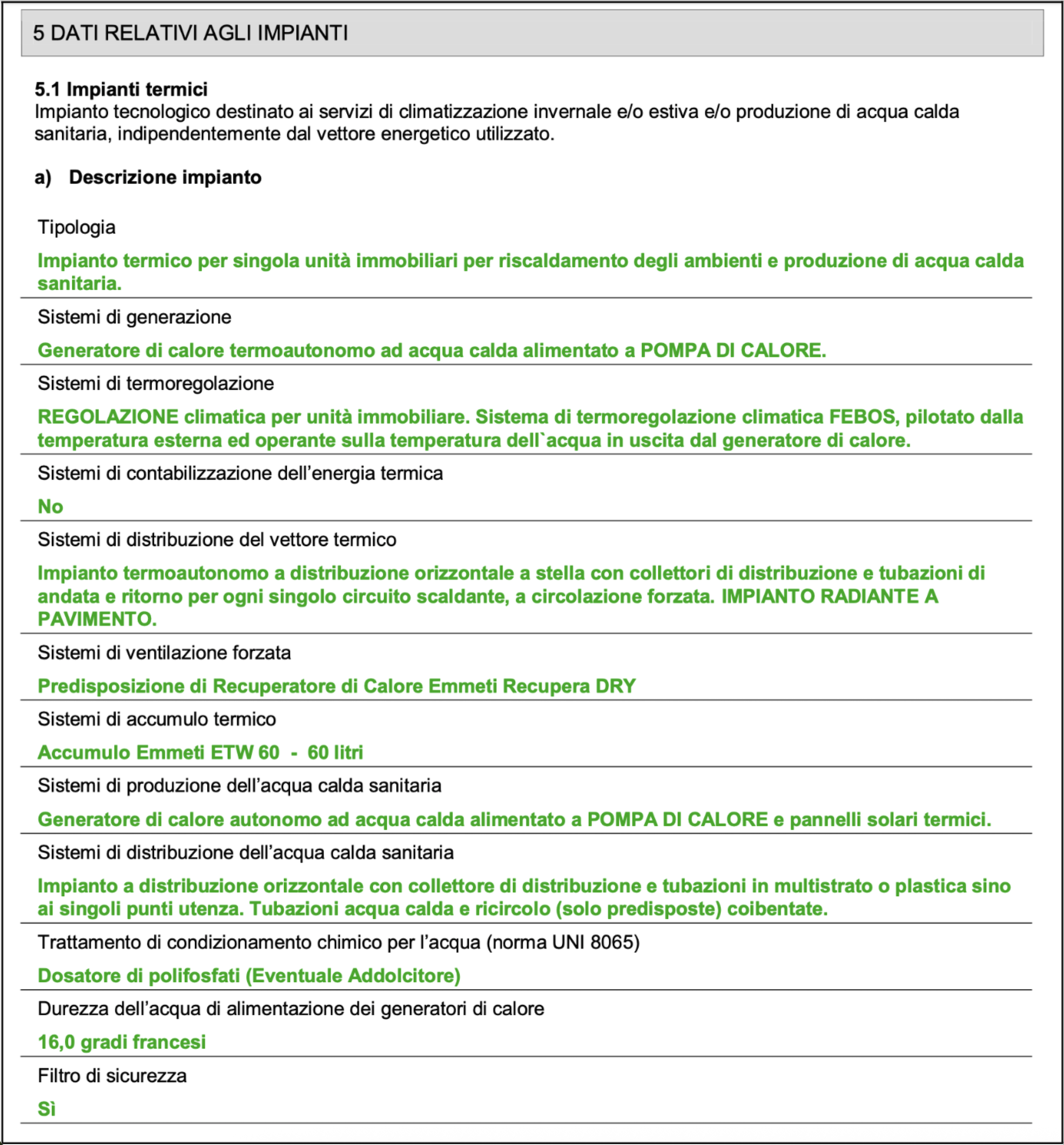
The solution integrates an air-water heat pump, underfloor radiant system, solar thermal system, photovoltaic system, storage tank for domestic hot water, predisposition for the Emmeti Recupera DRY heat recovery unit and FEBOS regulation. Each element has a specific function, but works within the same design logic.
The logic of the system is precisely this: each component performs a specific function, but the final performance depends on the way all the parts work together. It is the integration between generation, distribution, renewables and regulation that transforms the system into an efficient system.
How do the elements of the system communicate?
As mentioned, the system works because each component has a precise role and works in relation to the others:
Air-water heat pump
It is the main generator of the system. It uses outdoor air as the source and water as the fluid on the user side. It feeds the hydronic system of the home and works effectively with the radiant system, because it can operate with lower flow temperatures than traditional terminals.
Underfloor radiant system
It distributes heat evenly throughout the rooms, through dedicated manifolds and heating circuits. This solution improves thermal comfort and contributes to the performance of the heat pump, because it reduces the need to work with high temperatures.
FEBOS climate regulation
It coordinates the operation of the system according to the real conditions of the home. The regulation is controlled by the outdoor temperature and acts on the temperature of the water leaving the generator, adapting the system to the actual requirement.
Solar thermal system for domestic hot water
The Emmeti Arcobaleno VP 18 system, installed on the south-facing roof pitch and integrated into the roof covering, contributes to the production of domestic hot water. The technical report indicates a coverage of 66.4% of the annual requirement, with a 300-litre storage tank.
Photovoltaic system
The 4.0 kW grid-connected photovoltaic system, installed on the south-east, south and south-west roof pitches, contributes to the home’s electrical consumption. The technical report indicates an annual requirement coverage of 28.60%.
Emmeti Recupera DRY heat recovery unit
It adds a further level of comfort and air quality. The technical report provides for an air flow rate between 80 and 300 m³/h and a thermal efficiency of 91%.
In this way, the heat pump produces thermal energy, the radiant system distributes it, the solar thermal system supports domestic hot water, the photovoltaic system contributes to electrical consumption and FEBOS coordinates the operation of the system. The final efficiency comes precisely from this integration: each part improves the performance of the system as a whole.
What results did we obtain with this system?
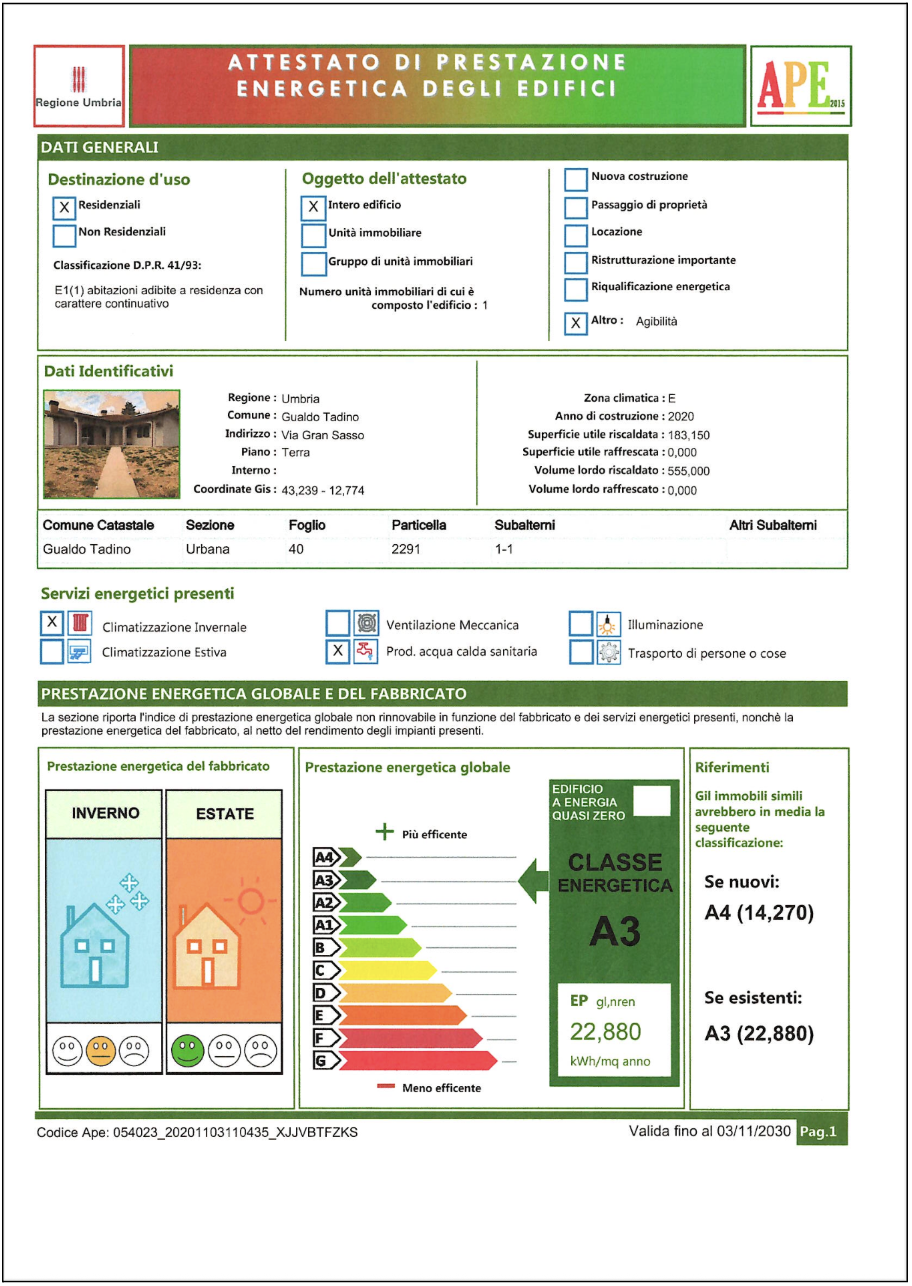
The result is a low-consumption home, certified in energy class A3, in which the system directly contributes to reducing energy requirements and using renewable sources.
As reported in the EPC, the building achieves an EPgl,nren value of 22.880 kWh/m² per year. This is the figure that summarises the final energy performance of the home and confirms the effectiveness of the building-system solution created.
The technical report then shows the concrete contribution of renewable sources: 85.9% for domestic hot water and 70.2% considering winter air conditioning, domestic hot water and summer air conditioning. These are important values because they indicate how much the system was designed to reduce the use of external energy and enhance the energy produced on site.
More specifically, the solar thermal system covers 66.4% of the annual domestic hot water requirement, while the 4.0 kW photovoltaic system covers 28.60% of the annual requirement.
The EPC also reports a CO? emissions value of 4.560 kg/m² per year, together with the presence of the main energy services: winter air conditioning, production of domestic hot water and solar photovoltaic.
In summary, the EPC and technical report confirm a high-performance realization: a home in which heat pump, radiant system, photovoltaic system, solar thermal system and FEBOS work together to improve efficiency, comfort and energy management.
Are you thinking about a low-impact home?
A low-impact home is built starting from integrated design, in which building and system are conceived together from the beginning.
The Emmeti realization in Gualdo Tadino shows exactly this: the result does not come from a single technology, but from the ability to coordinate heat pump, radiant system, photovoltaic system, solar thermal system and FEBOS regulation in a single system, designed to reduce consumption and improve daily comfort.
Do you want to understand which plant system is most suitable for your new home? EMMETI can support you in designing an integrated, efficient solution consistent with the characteristics of the house.
Faq
How is a low-consumption home designed?
A low-consumption home is designed by integrating building, system and renewable sources from the very beginning. It is not enough to choose individual efficient technologies: it is necessary to build a coherent system, in which generation, distribution, regulation and production from renewables work together.
In the EMMETI case in Gualdo Tadino, the system was developed as an integral part of the new single-family home, with heat pump, underfloor radiant system, photovoltaic system, solar thermal system, predisposition for mechanical ventilation and FEBOS regulation.
Which systems are needed for an A3 energy class home?
For an A3 energy class home, efficient systems designed in a coordinated way are required. In this case, an air-water heat pump, underfloor radiant system, solar thermal system for domestic hot water, photovoltaic system, predisposition for heat recovery unit and FEBOS system were integrated.
The energy class does not depend on a single system, but on the relationship between the building envelope, the needs of the building, production from renewables and the overall management of energy.
Why do heat pump and radiant system work well together?
Heat pump and radiant system work well together because both are suitable for operating at low temperatures. The radiant system distributes heat evenly throughout the rooms and allows the heat pump to operate more efficiently than systems that require higher flow temperatures.
This helps improve thermal comfort and reduce the home’s consumption.
What does FEBOS do in a domestic system?
FEBOS has the task of coordinating the operation of the system. In the case of Gualdo Tadino, the FEBOS climate regulation is connected to the outdoor temperature and acts on the temperature of the water leaving the generator.
In this way, the system can better adapt to the real conditions of the home, avoiding waste and making indoor comfort more stable.
What is the difference between photovoltaic and solar thermal?
Photovoltaic produces electricity from sunlight and can help power the home’s electrical consumption, including the heat pump.
Solar thermal, instead, uses the sun’s energy to produce heat, especially for domestic hot water. In an integrated system, photovoltaic and solar thermal perform different but complementary functions.